






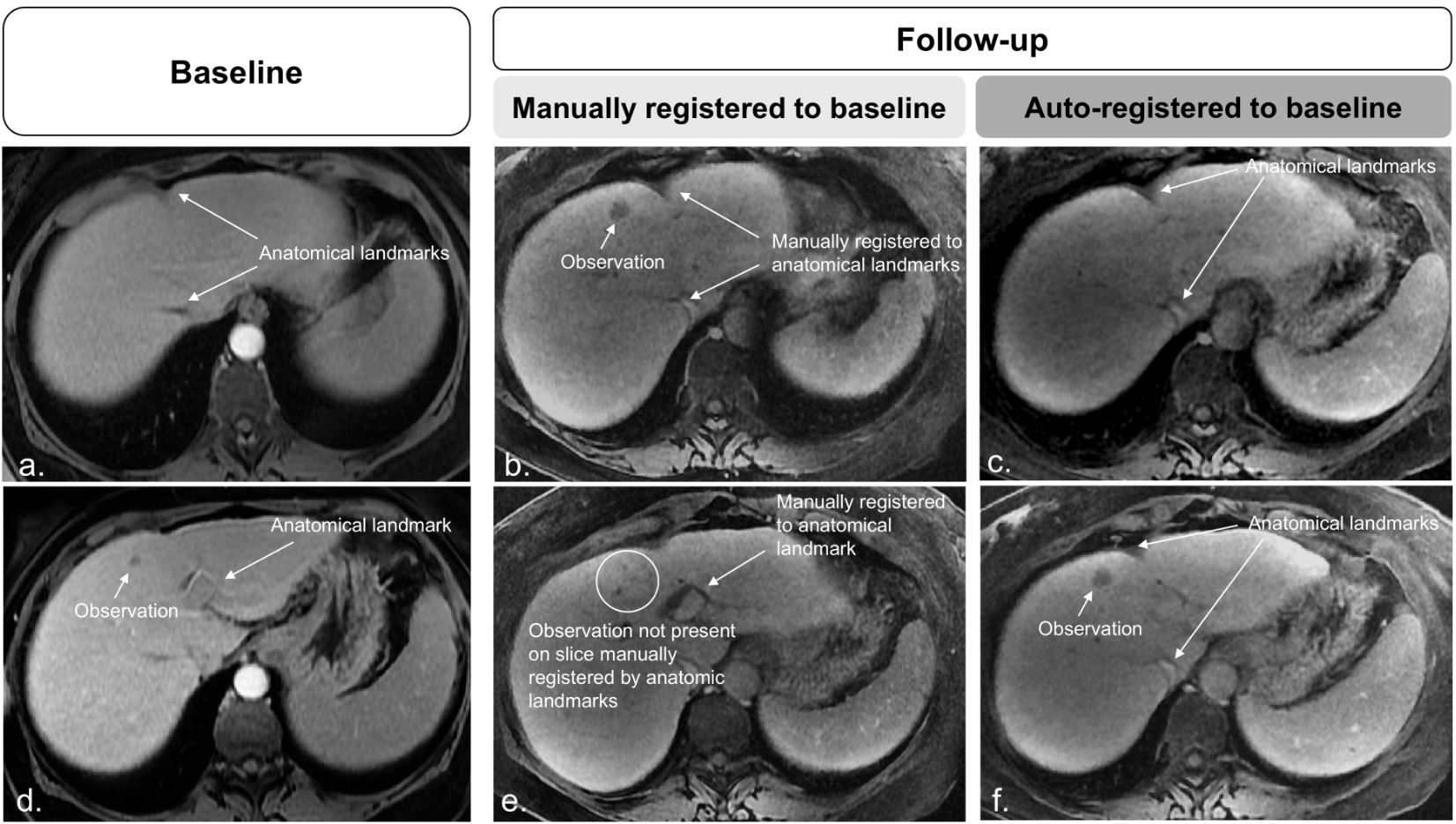
The authors of this study aimed to assess the performance of a convolutional neural network (CNN) algorithm to register cross-sectional liver imaging series and its performance to manual image registration. The study included three hundred fourteen patients who underwent gadoxetate disodium-enhanced magnetic resonance imaging (MRI) and were retrospectively selected.
Key points
- Image registration across series can improve lesion co-localization and reader confidence
- Combining convolutional neural network-based segmentation with affine transformations created a fully automated three-dimensional registration method for magnetic resonance images of the liver
- This algorithm improved liver overlap and focal liver observation co-localization over standard manual registration.
Authors: Kyle A. Hasenstab, Guilherme Moura Cunha, Atsushi Higaki, Shintaro Ichikawa, Kang Wang, Timo Delgado, Ryan L. Brunsing, Alexandra Schlein, Leornado Kayat Bittencourt, Armin Schwartzman, Katie J. Fowler, Albert Hsiao & Claude B. Sirlin