








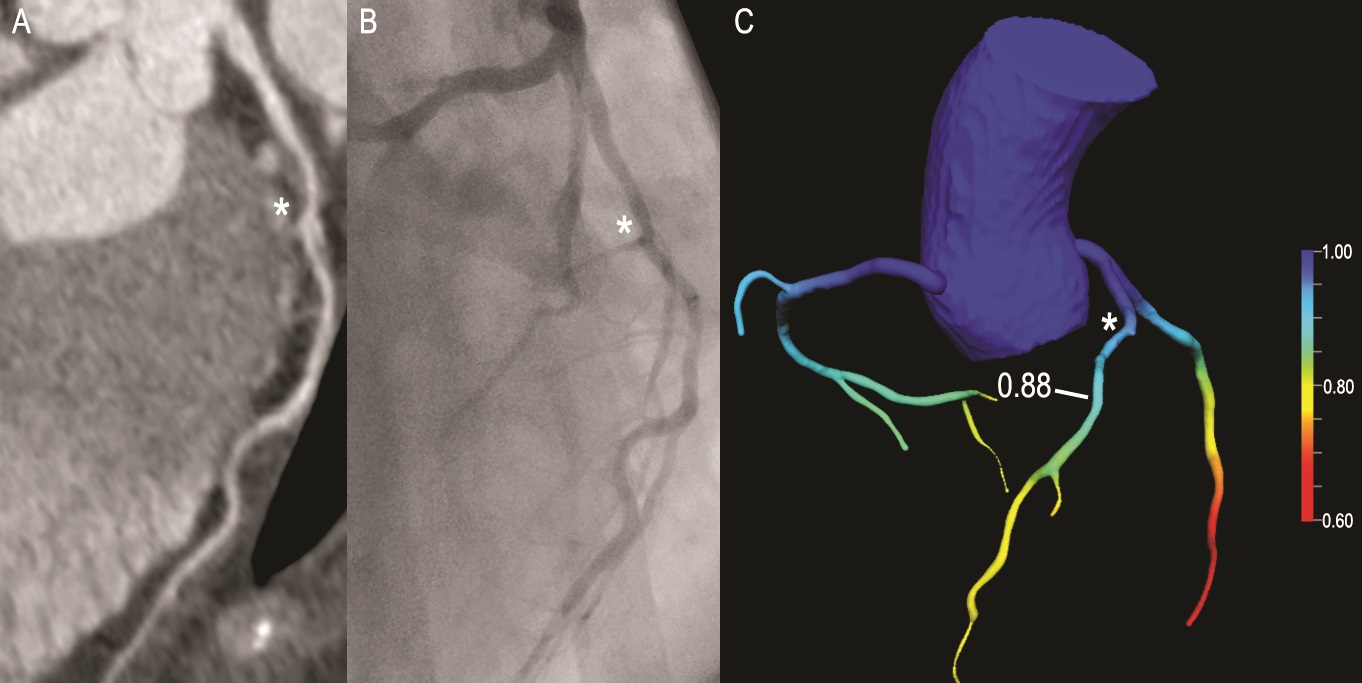
In this observational cohort study, the authors aimed to determine the potential impact of machine learning (ML) CT-derived fractional flow reserve (CT-FFR) on the diagnostic efficiency and effectiveness of coronary CT angiography (CCTA) in patients with obstructive coronary artery disease (CAD). It was found that the implementation of on-site CT-FFR may change management and help to improve diagnostic efficiency and effectiveness in patients with obstructive CAD.
Key points
- The availability of on-site CT-FFR in the diagnostic evaluation of patients with obstructive CAD on CCTA would have significantly reduced the number of patients requiring additional testing compared with CCTA alone.
- The implementation of on-site CT-FFR would have changed the initial management strategy significantly in the patients with obstructive CAD on CCTA.
- Restricting ICA to patients with a positive CT-FFR would have significantly reduced the ICA rate in patients with obstructive CAD on CCTA.
Authors: Fay M. A. Nous, Ricardo P. J. Budde, Marisa M. Lubbers, Yuzo Yamasaki, Isabella Kardys, Tobias A. Bruning, Jurgen M. Akkerhuis, Marcel J. M. Kofflard, Bas Kietselaer, Tjebbe W. Galema & Koen Nieman