







Advertorial
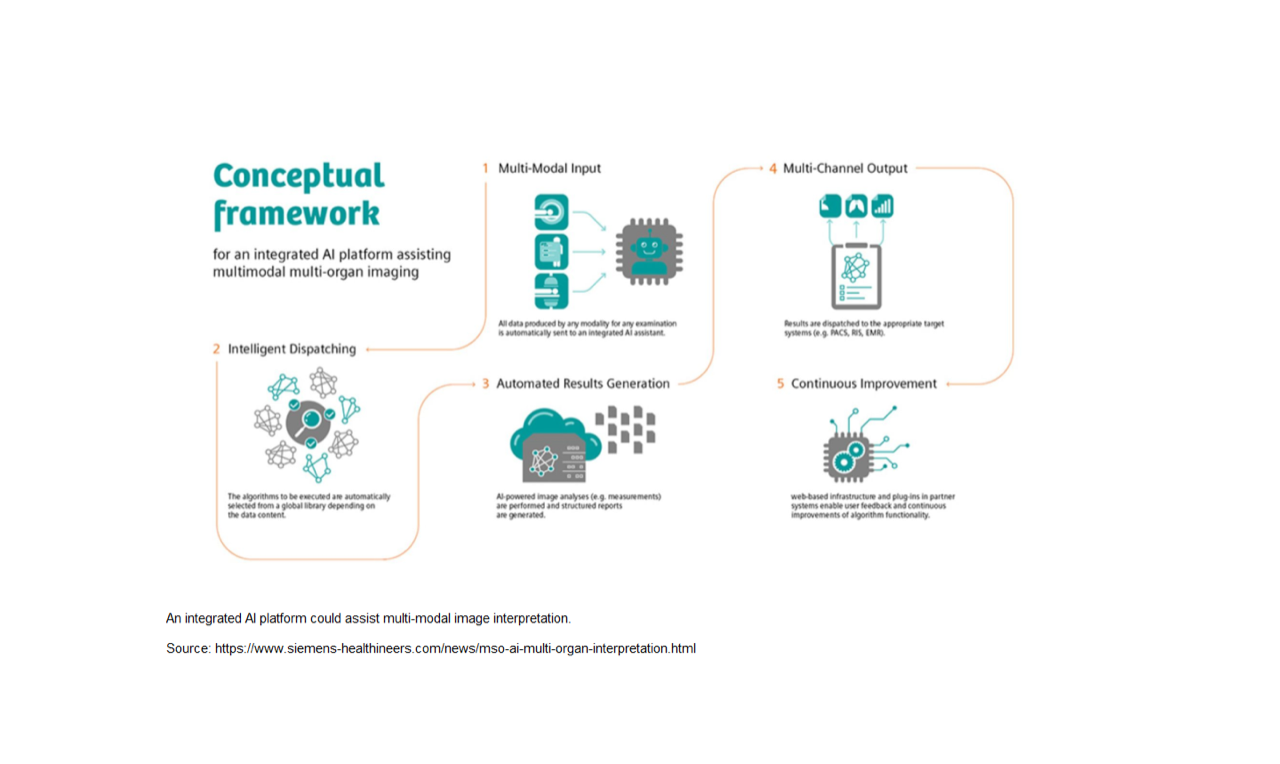
The broader implementation of artificial intelligence (AI) will be based on versatile systems that can be seamlessly integrated into existing workflows and IT architectures. Assessing multiple anatomical structures and organs on a chest CT more quickly and precisely would be one strategy to make AI support a self-evident aspect of image interpretation.
A crucial prerequisite for advancing the implementation of AI and fully exploiting its benefits is the availability of easy-to-use, comprehensive solutions for clinical routine. In particular, compatibility with existing picture archiving and communication systems (PACS) is key to the successful use of AI in healthcare organizations. “Ultimately, the driver of clinical adoption may reside in the implementation and availability of AI applications integrated into the PACS system at the reading station,” confirms a technology white paper from the Canadian Association of Radiologists [1]. In other words: AI should not reinvent workflows, but should instead improve and accelerate what radiologists do every day in as many different ways as possible.
In general, experts assume that completely independent diagnostic algorithms will find their way into radiological routines only in the medium to long term and that AI will, in the near future, rather serve to accelerate workflows and facilitate image interpretation [2].
Read more here or download the Whitepaper here.
[1] Tang A, Tam R, Cadrin-Chênevert A et al. (2018) Canadian Association of Radiologists White Paper on Artificial Intelligence in Radiology. Can Assoc Radiol J 69:120-135
[2] Loria K (2018) “Putting the AI in Radiology”. Radiology Today Vol. 19 No. 1 P. 10. http://www.radiologytoday.net/archive/ rt0118p10.shtml (last accessed June 12, 2018)