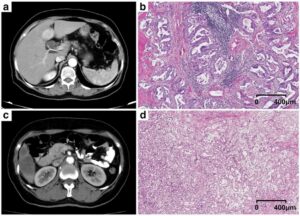







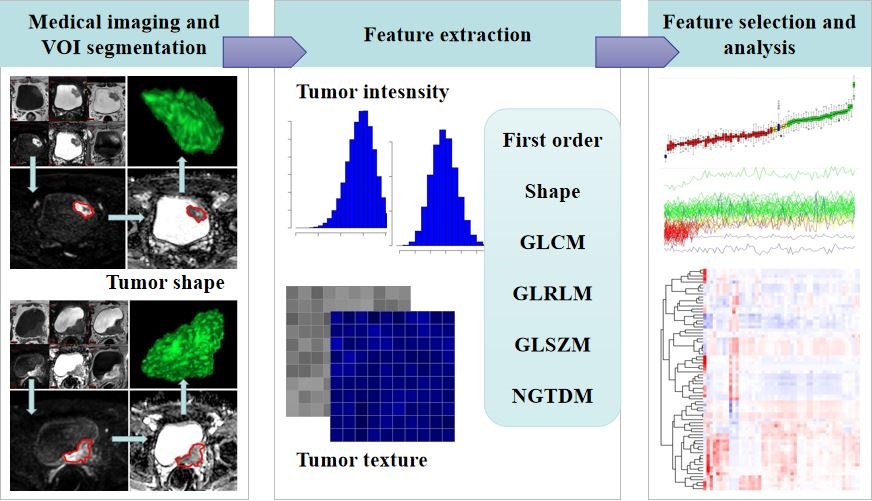
The purpose of this retrospective study was to investigate the value of radiomics features from diffusion-weighted imaging (DWI) in differentiating muscle-invasive bladder cancer (MIBC) from non-muscle-invasive bladder cancer (NMIBC). The study included 218 bladder cancer patients who underwent DWI prior to biopsy between July 2014 and December 2018. The authors discovered that combining DWI radiomics features with transurethral resection (TUR) could help to improve sensitivity and accuracy in differentiating the presence of muscle invasion in bladder cancer for clinical practice.
Key points
- Twenty-seven to 51% of superficial bladder cancers diagnosed by transurethral resection are upstaged to muscle-invasive at radical cystectomy, suggesting its poor sensitivity for discriminating muscle-invasive bladder cancer.
- A small subset of selected all-relevant radiomics features exhibited an equivalent performance compared to that of all the extracted features, confirming that radiomics data contained redundant or irrelevant features and that feature selection should be performed in building radiomics models.
- Combining DWI radiomics features with transurethral resection could improve in clinical practice the sensitivity and accuracy for the detection of muscle invasion in bladder cancer.
Authors: Shuaishuai Xu, Qiuying Yao, Guiqin Liu, Di Jin, Haige Chen, Jianrong Xu, Zhicheng Li, Guangyu Wu