








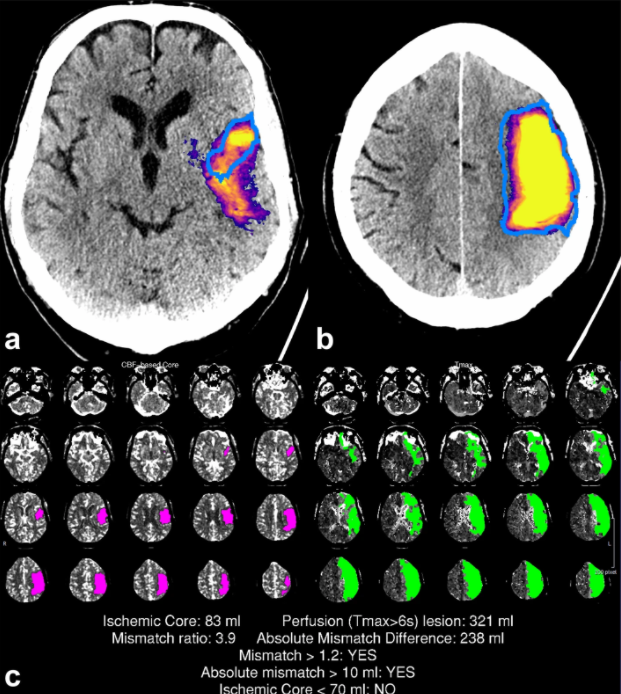
The authors of this study aimed to determine the efficacy of a convolutional neural network (CNN) in final infarct volume prediction from computed tomography angiography (CTA), subsequently comparing the results to a CT perfusion (CTP)-based commercially available software. The stroke cases treated with thrombolytic therapy or receiving supportive care were retrospectively selected by the authors. The study found that a CTA-based CNN software can provide good infarct core volume estimates as observed in follow-up imaging studies.
Key points
- A computed tomography angiography (CTA)-based convolutional neural network (CNN) can predict infarct volume in anterior circulation ischaemic stroke.
- A CTA-based CNN estimates of ischaemic lesion volumes correlated well with infarct volumes measured from follow-up computed tomography images.
- Our method had a good correlation with computed tomography perfusion-RAPID estimated infarct core volumes.
Authors: Lasse Hokkinen, Teemu Mäkelä, Sauli Savolainen & Marko Kangasniemi