








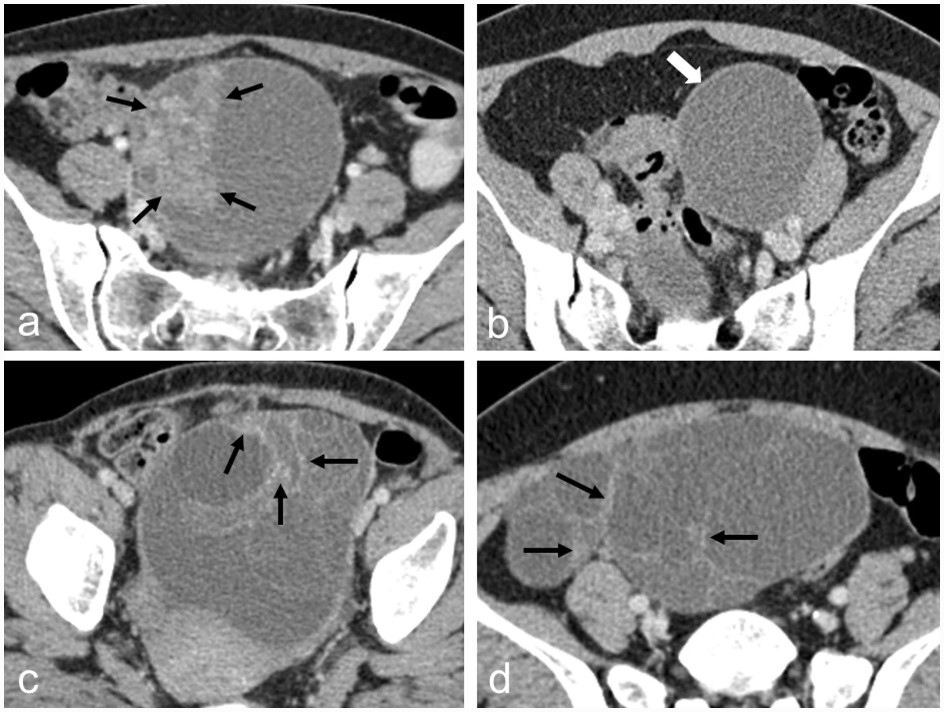
The authors of this study developed a CT-based artificial intelligence model with the ability to differentiate between benign and malignant ovarian tumors, showing high accuracy and specificity. In coordination with less-experienced radiologists, the model helped in the performance of ovarian tumor assessment, with applications to provide better therapeutic strategies for patients with ovarian tumors.
Key points
- CT-based radiomics and deep learning features could differentiate ovarian tumors.
- Radiomics, deep learning features, and clinical data provided complementary tumor information.
- The ensemble model improved the radiologists’ performance in assessing ovarian tumors.
Authors: Ya-Ting Jan, Pei-Shan Tsai, Wen-Hui Huang, Ling-Ying Chou, Shih-Chieh Huang, Jing-Zhe Wang, Pei-Hsuan Lu, Dao-Chen Lin, Chun-Sheng Yen, Ju-Ping Teng, Greta S. P. Mok, Cheng-Ting Shih & Tung-Hsin Wu